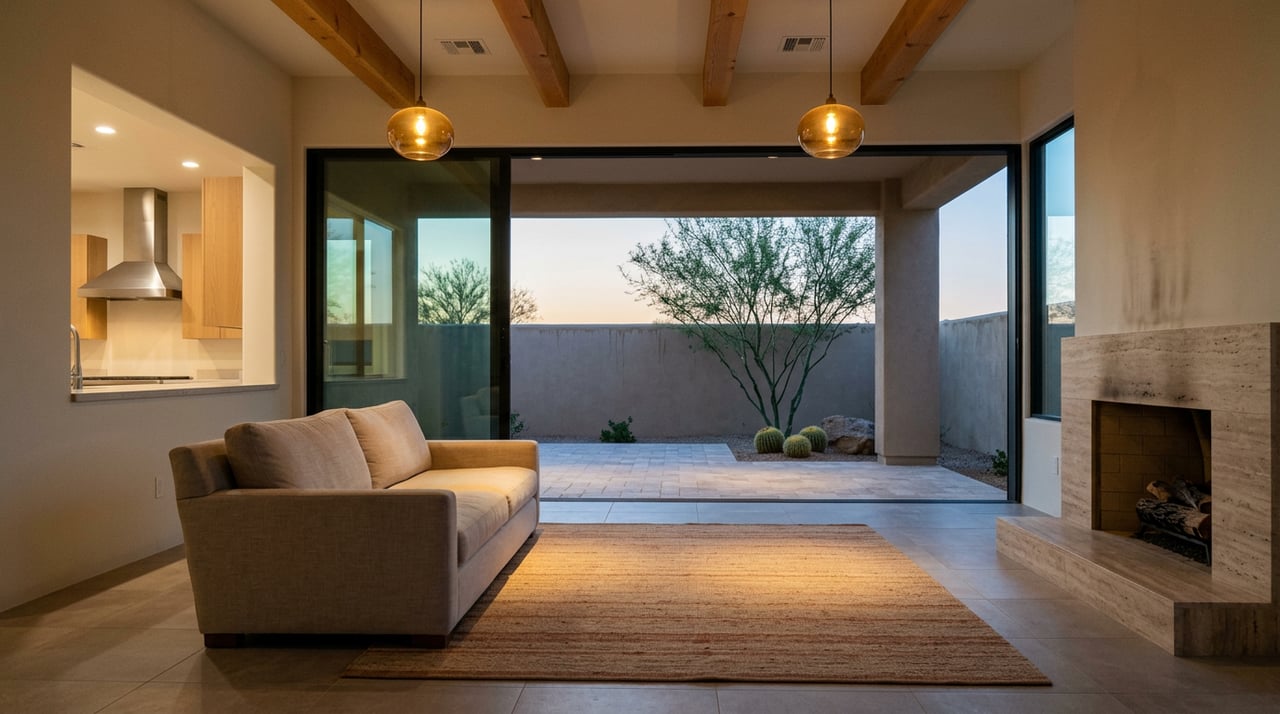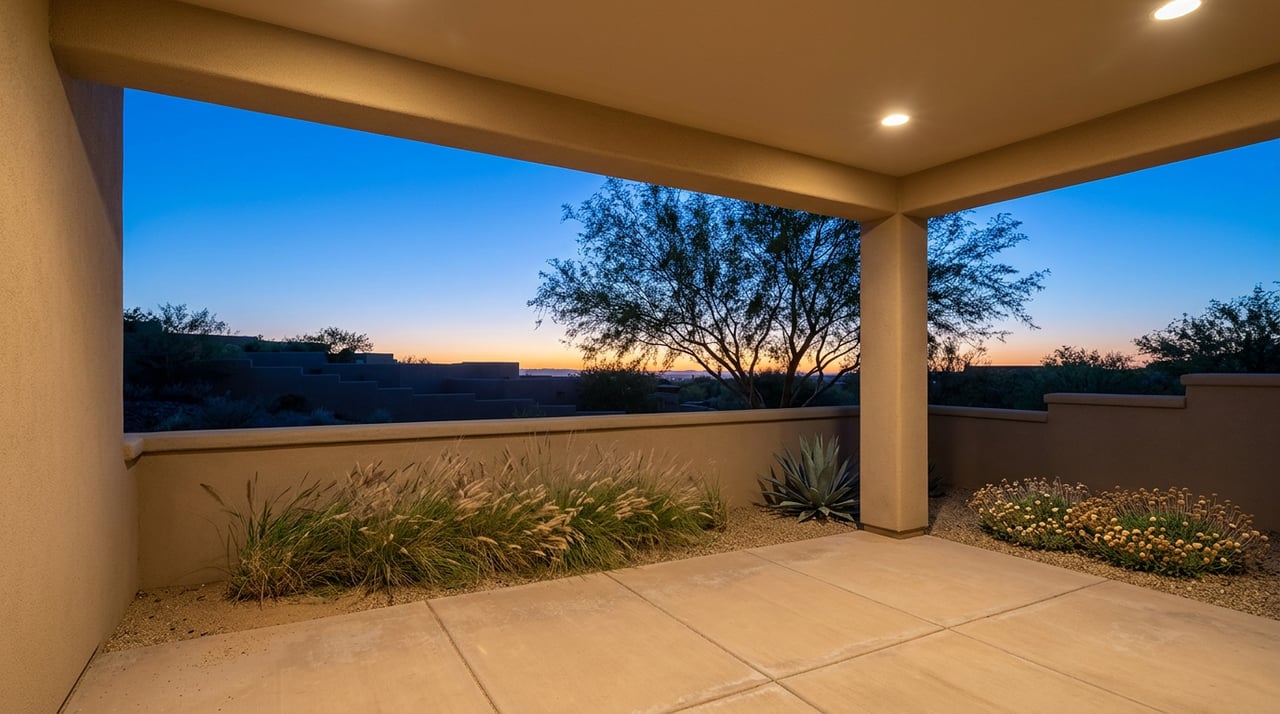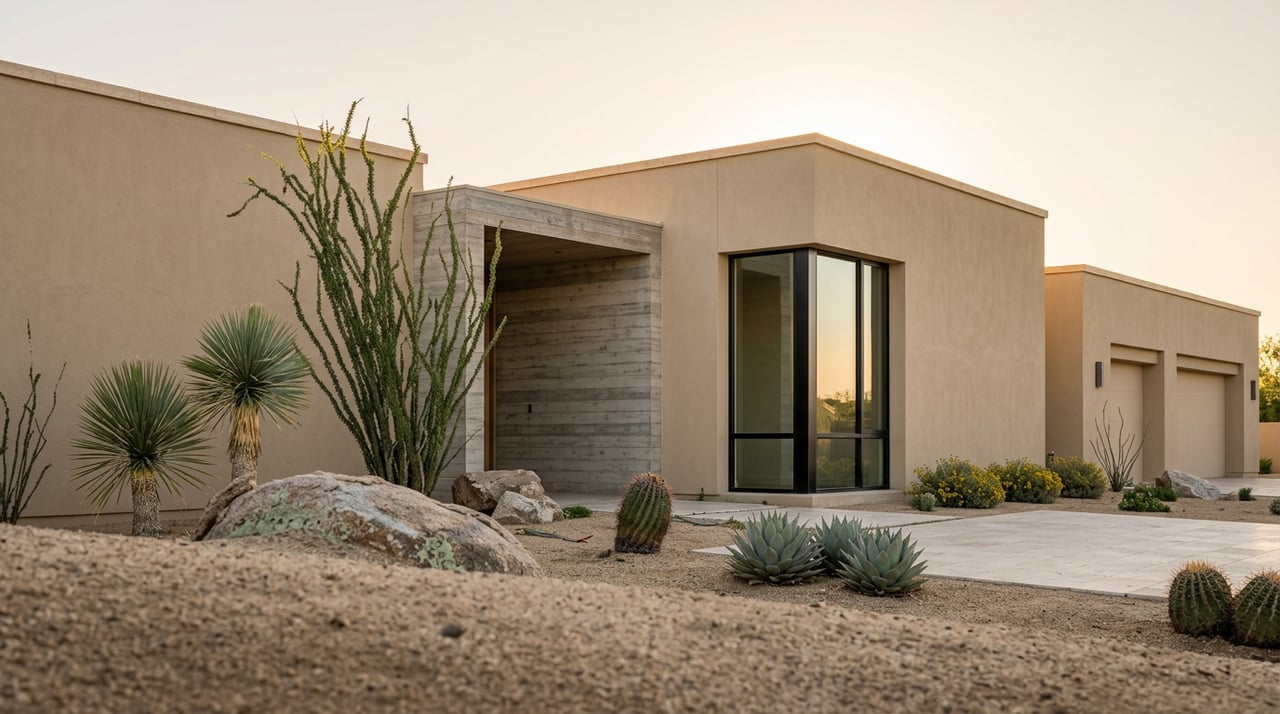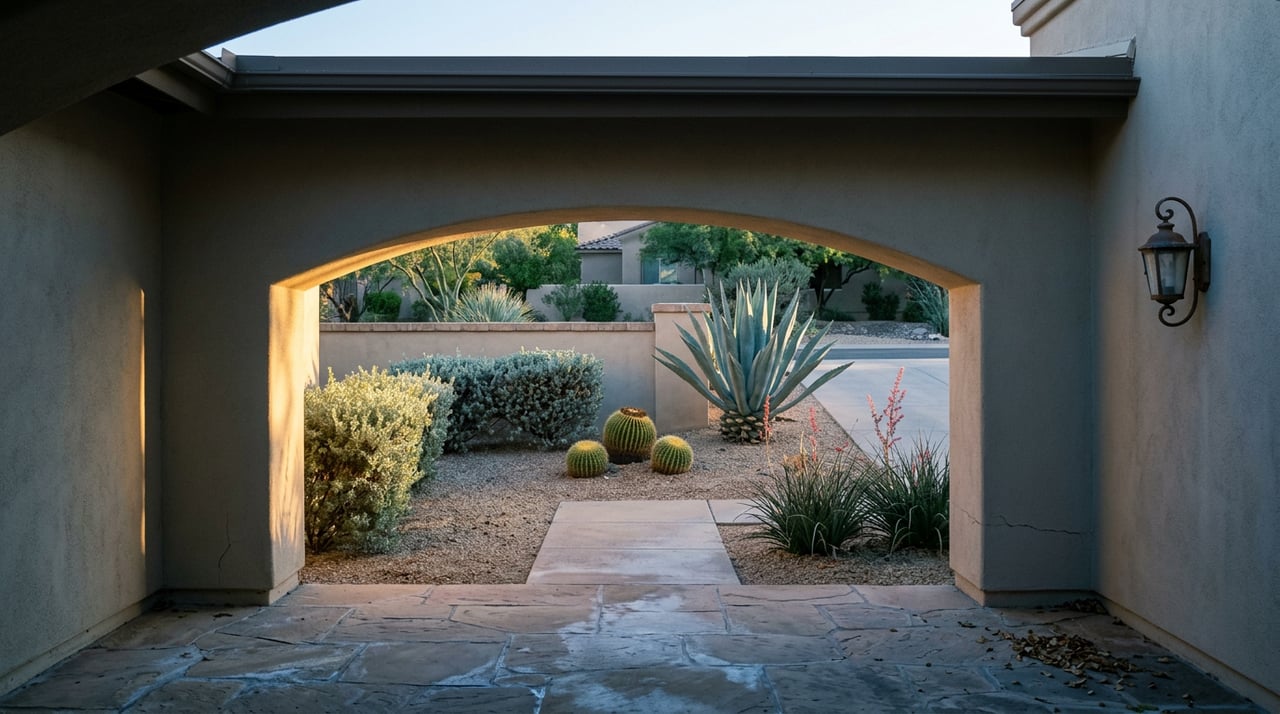
Two listings go live on the same day. Both say "Residential Estates" in the headline. One sits on a golf course lot near downtown with no gate at the end of the street. The other sits inside a gated community on the east side of town, backed by an HOA that reviews paint colors and garage depth before a shovel goes in the ground. A buyer scrolling past both assumes they're looking at variations on the same neighborhood. They're not. They're looking at a name doing two unrelated jobs, and the difference matters more than the price tag once you're the one signing the offer.
A Neighborhood Name and a Zoning Code, Sharing One Word
Residential Estates is a real, specific neighborhood in the center of Lake Havasu City, wrapped around the two municipal golf courses that Robert P. McCulloch built in the 1960s to sell lake lots. The West Course opened its front nine in 1967, its back nine in 1969, and the East Course followed in 1977. McCulloch's plan put large homes on the lots backing those fairways so residents got desert views out front and green expanses out back. That layout is still the draw. Homes here trade on golf frontage, mature lots, and a location close enough to walk to Cypress Park and downtown Main Street.
Here's the part that trips people up. Residential Estates the neighborhood is not gated and does not have a single homeowners association covering it. Property use is governed by city zoning and whatever deed restrictions happen to attach to an individual lot, not by a community-wide architectural committee. There's no board reviewing exterior paint, no design guideline enforcing rooflines, no gate fee funding a shared clubhouse.
At the same time, "RE" is also the City of Lake Havasu City's zoning designation for Residential Estates land use, and that same zoning code sits underneath several separate, fully gated, HOA-run communities elsewhere in town. Havasu Foothills Estates, the master-planned community on the east side with its Arroyos, Enclaves, Ladera, and Villas phases, is entirely zoned RE. It also comes with underground utilities and HOA design standards that keep new construction from sitting next to an older, mismatched home. So a buyer can see "zoned RE" attached to a listing in Foothills and assume it means the same thing as a listing in the neighborhood literally called Residential Estates. It doesn't. One zoning label, two very different rulebooks for what your neighbor is allowed to do with their lot.
What the Two Rulebooks Actually Cover
| Residential Estates (the neighborhood) | Havasu Foothills Estates (RE-zoned, HOA-governed) | |
|---|---|---|
| Gated | No | Yes |
| Master HOA | None | Yes, with design review |
| Architectural control | City zoning and per-lot deed restrictions only | HOA design standards |
| Utilities | Full city water, sewer, electric, telecom | Underground utilities required |
| Rental rules | Governed by city ordinance, verify per property | Set by HOA, generally more restrictive |
| RV parking | Varies by property, regulated by city zoning | Regulated by HOA and lot design |
The two communities share a zoning letter and nothing else in terms of who has authority over what gets built or maintained next door.
What the Premium Is Actually Buying
Residential Estates carries a real price premium over the city as a whole. Lake Havasu City's median sale price sat at $461,395 as of August 2026, down close to 4 percent year over year. Current live listings inside Residential Estates, pulled from several different filtered views on the same platform this month, land consistently in the high $600,000s to just under $710,000. That's roughly a third to a half above the citywide figure, and it holds whether you're looking at pending listings, green-certified homes, or the general inventory feed.
Time on market tells the more interesting story. Across every one of those filtered snapshots, homes in Residential Estates are sitting between 80 and 89 days before going pending. That's on the slower end for Havasu, not the faster end you'd expect from a neighborhood commanding a price premium in a market where the citywide average has been landing closer to 75 to 83 days. The premium here isn't buying speed. It's buying golf frontage, mature lot size, and a central location. It is not buying the kind of buyer confidence that comes from knowing every other house on the street had to clear the same design review you did.
There's a second wrinkle worth flagging if you're the kind of buyer or seller who leans on a quoted median to gut-check a price. Residential Estates sees very few sales at any given time. Some monthly snapshots show as few as two or three closings in the entire neighborhood. When a "median" is built from three sales, one unusually large lot or one distressed teardown can swing that number by tens of thousands of dollars in either direction. That's a different animal from the citywide median, which is drawing from a hundred or more closings a month and smooths out those swings. If someone hands you a Residential Estates median as though it behaves like the citywide number, ask how many sales it's built on before you anchor a price to it.
The Enforcement Gap Nobody Puts in the Listing Photos
Here's where the name does its most quiet work. A buyer touring Residential Estates after seeing The Refuge or Havasu Foothills Estates, both gated communities with active HOAs, can walk away assuming Residential Estates offers a similar level of consistency. It's an easy assumption. The name sounds like it belongs in the same category. The two golf courses at its center give it the same manicured, master-planned feel those other communities cultivate.
But there's no HOA here reviewing what the next owner does with the lot next door. If a neighbor wants to park a boat trailer on the side yard, add a mismatched addition, or let a roof go a decade past due for attention, city zoning and any individual deed restriction are the only backstops, and those vary lot by lot rather than applying uniformly across the neighborhood. Compare that to Havasu Foothills Estates, where the same RE zoning comes wrapped in HOA fees, underground utility requirements, and design review before construction starts. Two neighborhoods, same base zoning, completely different levels of what a buyer can count on five years after closing.
This isn't a reason to avoid Residential Estates. Plenty of buyers want exactly what it offers: golf course views, established lots, a central location, and freedom from HOA dues and design committee meetings. But that trade should be a choice, not a surprise discovered during a due diligence period.
Questions Worth Asking Before You Write the Offer
- Does this specific property carry an individual deed restriction, and what does it actually cover?
- What is the city zoning classification, and does it match what the listing implies about the neighborhood?
- How many comparable sales support the price the agent is quoting, and over what window?
- Are there any planned changes to adjacent lots that a buyer would want to know about before closing?
- If this listing mentions "RE" zoning, is it inside the ungated central neighborhood or inside one of the separately HOA-governed communities that share the same zoning code?
None of these questions are complicated to ask. They're just easy to skip when a listing photo shows a fairway view and a price that already feels like it belongs to a managed community.
FAQ
Is Residential Estates a gated community? No. It is a centrally located, ungated neighborhood without a master homeowners association.
Does "zoned RE" mean the same thing everywhere in Lake Havasu City? The zoning code is consistent, but what sits on top of it is not. Some RE-zoned communities, like Havasu Foothills Estates, layer HOA design review and gating on top of the base zoning. The neighborhood named Residential Estates does not.
Why does Residential Estates cost more than the city median if it has no HOA amenities? The premium tracks to golf course frontage, established lot sizes, and a central location near downtown rather than to any community-wide governance or shared amenities.
Should I trust a quoted median price for this specific neighborhood? Ask how many sales it's built on first. With only a handful of closings moving through Residential Estates in any given month, a single unusual sale can shift the number meaningfully.
If you're weighing a golf-adjacent lot in Residential Estates against a gated option elsewhere in Lake Havasu City, that's exactly the kind of comparison The Denovan Group walks buyers through every week. Reach out for a free home valuation and a straight answer about what a specific address actually promises before you write the offer.