If you have ever driven through Residential Estates and thought, “Why do these homes feel so distinct from one another, yet still fit together?” you are not imagining it. This area of Lake Havasu City has a custom-home character shaped by larger lots, hillside siting, and a climate that rewards smart desert design. In this guide, you will see the architectural styles that show up most often, the features that define the neighborhood, and what those details can tell you as a buyer or seller. Let’s dive in.
What Makes Residential Estates Distinct
Residential Estates is best understood as Lake Havasu City’s R-E estate district. City code describes it as large-lot, single-family development along a golf course or around recreational and open-space uses, with a minimum lot size of 15,000 square feet, a maximum density of 3 dwelling units per acre, and 20-foot front and rear setbacks.
That land pattern matters because it shapes the homes you see. Larger lots and lower density give builders and owners more room for custom layouts, bigger garages, deeper setbacks, and stronger view orientation than you usually find in a standard subdivision.
Current market descriptions also frame the area as a residential hillside neighborhood with wide-lot streets and desert-lake views. In practical terms, that means architecture here is not just about the front exterior. It is also about where the home sits on the lot, how it captures views, and how it connects indoor and outdoor living.
Main Architectural Styles You See
Residential Estates does not follow one rigid architectural style. Instead, the neighborhood blends several design influences, which is one reason it feels custom rather than repetitive.
Southwest and Santa Fe Influence
One of the strongest themes is a Southwest or Santa Fe baseline. Across Lake Havasu City, many single-family homes feature stucco exteriors and clay-tile roofs, and that style shows up clearly in Residential Estates as well.
You will often notice warm desert tones, simple massing, textured stucco, and details that feel grounded in the local landscape. In this setting, the Southwest look works well because it pairs naturally with low-water yards, strong sun, and outdoor spaces designed for shade.
Contemporary Updates
Newer homes and updated properties in Residential Estates often lean contemporary. That does not always mean ultra-minimal design. More often, it means cleaner lines, brighter interiors, updated materials, and a stronger connection between interior rooms and outdoor entertaining areas.
This is why many homes in the neighborhood feel current even when they are not brand-new builds. A home may keep its desert-style exterior while adding quartz or granite surfaces, lighter cabinetry, larger windows, and more open living spaces.
Mid-Century Modern Cues
Mid-century modern also appears in the mix, including at least one current example on the golf course. In Residential Estates, this style often shows up through low horizontal lines, open gathering areas, and a focus on views and natural light.
The local version is usually adapted to the desert setting. Instead of looking like a textbook mid-century home from another region, it often blends mid-century ideas with materials and outdoor spaces that fit Lake Havasu’s climate.
Split-Level Elements
Some homes in the area also carry split-level cues. This can be especially practical on hillside lots where elevation changes create opportunities for varied floor plans, view decks, or separated living spaces.
In Residential Estates, split-level design is less about style for style’s sake and more about using the lot effectively. It can help a home follow the terrain while making the most of lake, mountain, or fairway views.
Why Custom Design Is the Real Theme
If there is one phrase that best describes Residential Estates, it is estate-style custom homes. The neighborhood includes older established homes, newer custom construction, and heavily updated interiors, so the visual language changes from property to property.
That variety is part of the appeal. Instead of a uniform streetscape with repeated floor plans, you are more likely to see homes that respond to their lot size, the slope of the land, nearby golf-course frontage, or open views toward the lake and mountains.
For buyers, this means each home deserves a closer look beyond the style label. For sellers, it means the details that make your property unique can have real value when they are marketed clearly.
Outdoor Living Shapes the Architecture
In Residential Estates, outdoor living is not an afterthought. It is one of the clearest design signatures in the neighborhood.
Covered Patios and Arizona Rooms
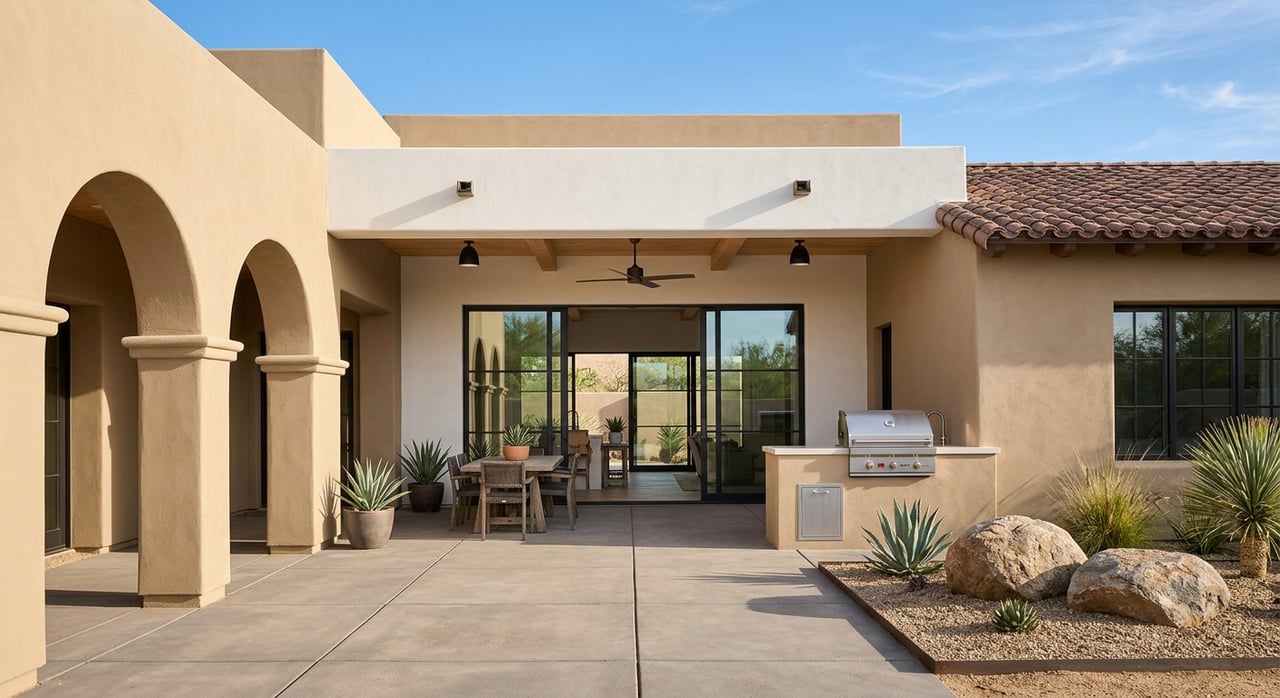
Current listings highlight front covered patios, oversized Arizona rooms, rear lanais, and private courtyards. These spaces help homes stay usable and comfortable in a climate with over 300 days of sunshine, low humidity for most of the year, and very low rainfall.
Because of that climate, shade matters. Covered outdoor areas become part of the home’s architecture, creating places to relax, entertain, or enjoy views without full exposure to the sun.
Pools, Spas, and Entertaining Areas
Pools, spas, outdoor kitchens, BBQ areas, bocce courts, and putting greens also show up in active examples. These are not just luxury extras. In many Residential Estates homes, they are built into the overall design and help define how the property lives day to day.
On larger lots, these amenities have room to breathe. That extra space can make outdoor areas feel more intentional and better connected to the home’s layout.
View Decks and Sightlines
View orientation is another major design factor. Listings regularly mention front lake views, panoramic lake and mountain views, fairway frontage, cul-de-sac placement, or natural washes that create a sense of separation.
This means the architecture often responds to the lot as much as to style preferences. Window placement, patio direction, deck location, and even room arrangement may all be shaped by the goal of framing the best available view.
Garages and Storage Matter Here
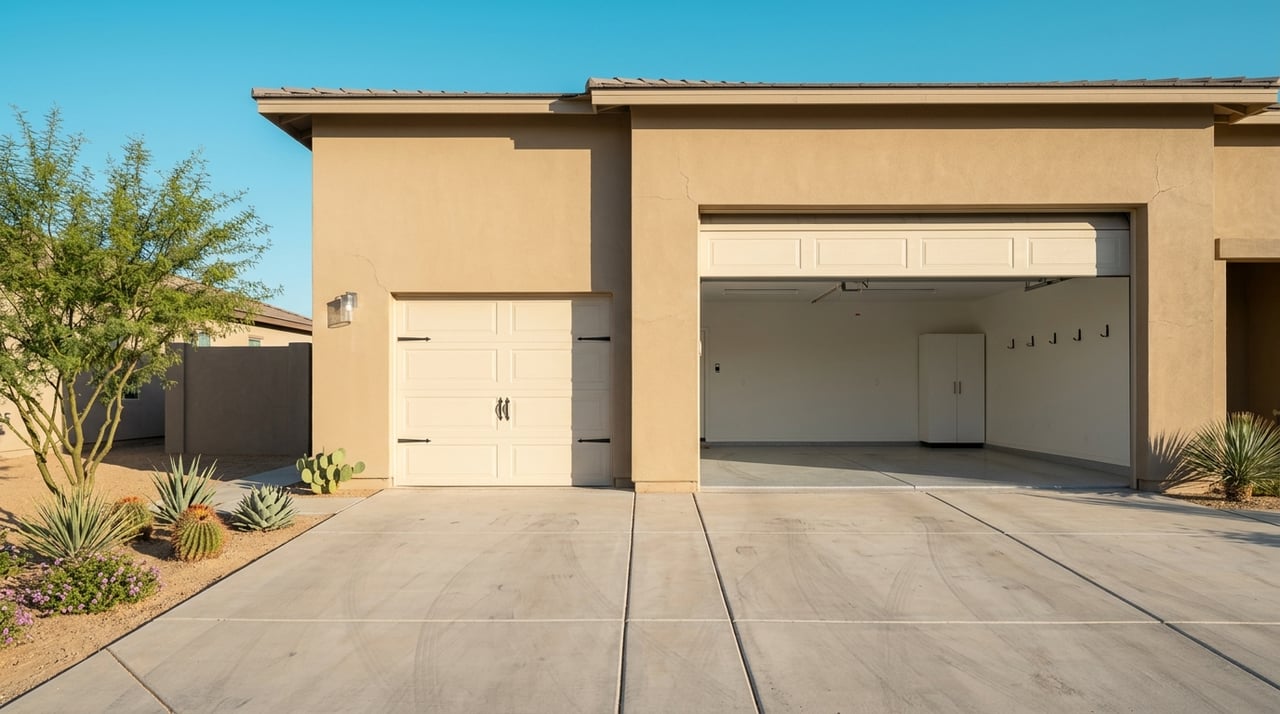
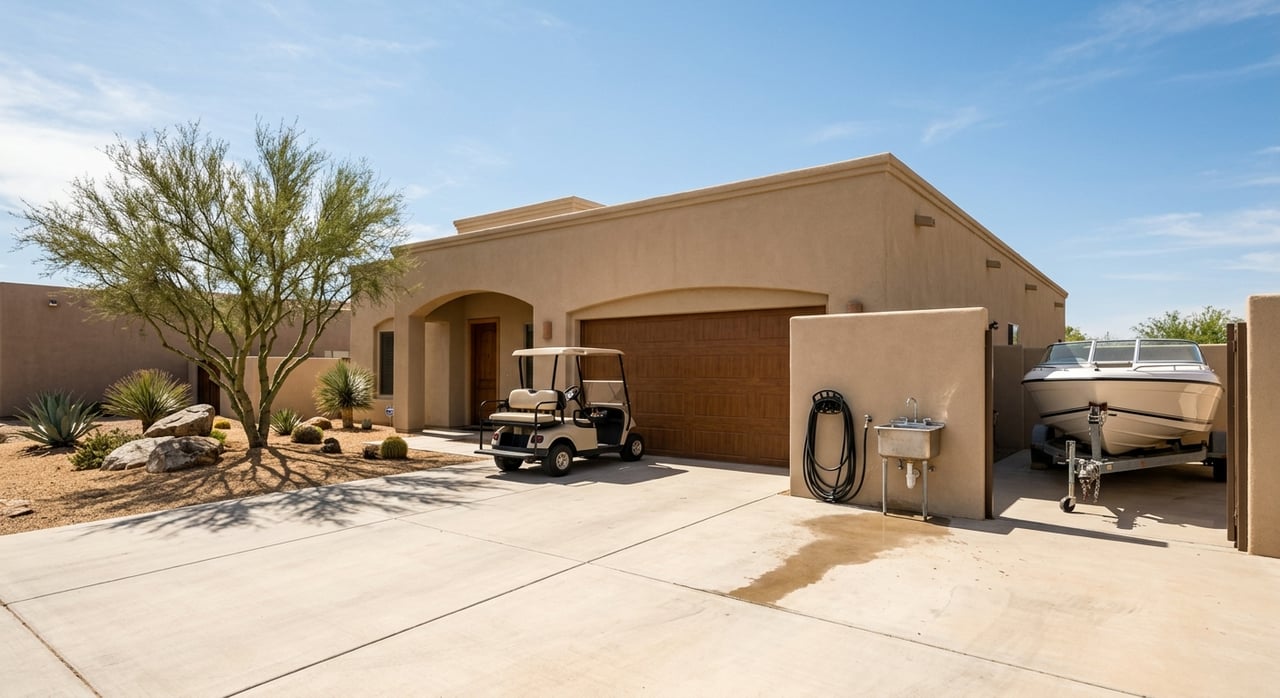
One of the most practical architectural features in Residential Estates is generous garage and parking space. Active listings mention 35-foot-deep garages, boat-deep garage space, drive-through RV garages, gated RV parking, side parking on both sides, and room for future additions such as an extra garage or casita.
That kind of storage is not a side note in this neighborhood. It is often a core part of the home’s design, especially on large lots where parking, hobby space, and expansion potential can be planned from the start.
For buyers, this can be a major point of comparison between homes. For sellers, well-designed garage and parking features can be just as important to highlight as the kitchen or primary suite.
Common Materials and Finishes
While architectural styles vary, several finishes appear again and again across Residential Estates. These choices make sense for both the local look and the demands of the climate.
Exterior Materials
Stucco exteriors remain one of the most common exterior finishes. Paver driveways, tile-based entry treatments, turf accents, mature palms, and architectural landscape lighting also show up often in current listings.
These features support the neighborhood’s desert-resort feel. They also tend to work well with the area’s sun, heat, and low-water landscaping approach.
Interior Finishes
Inside, common finishes include quartz or granite countertops, tile or travertine floors, and white or alder cabinetry. Many homes balance desert warmth with a cleaner, more updated feel, which is one reason the neighborhood often reads as Southwest with contemporary layering.
This combination helps homes feel durable, practical, and aligned with local buyer expectations. It also supports the view-forward style that many owners want in Lake Havasu City.
Climate-Smart Features
Several homes also mention solar panels, natural gas, and underground utilities. In a sunny, low-humidity setting with extreme summer heat, those features fit the practical side of local design.
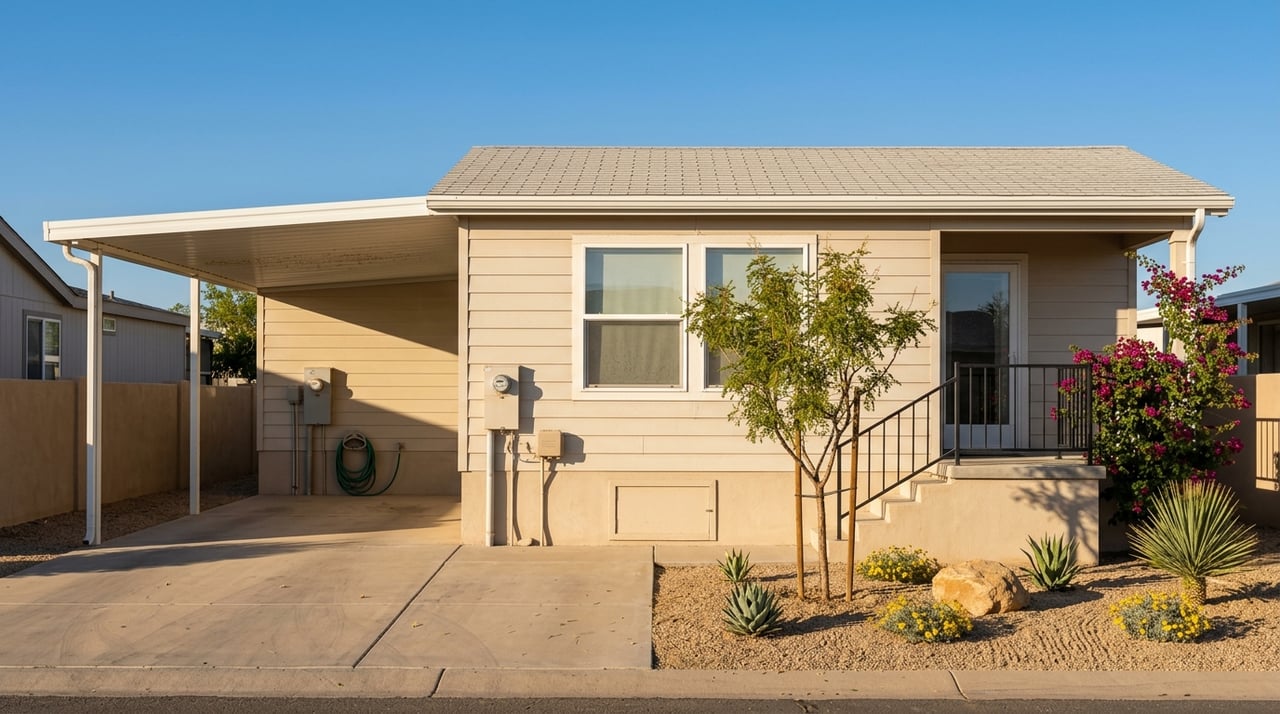
The same logic carries into landscaping. City guidance calls for water-conserving plant materials that are hardy for northwestern Arizona conditions, and local design guidance discourages artificial plant material. That helps explain why hardscape-heavy yards, gravel, and low-water planting are so common in the area.
How the Desert Climate Influences Style
Lake Havasu City sits in a transition zone between the Sonoran and Mojave deserts. The city’s water-conservation planning notes sparse native vegetation, high evapotranspiration, low rainfall, and extreme summer heat.
That environment shapes architecture in clear ways. Homes here often prioritize shade, durable exterior materials, covered outdoor areas, and landscaping that can hold up with limited water.
So when you see stucco walls, deep patios, paver surfaces, desert-friendly yards, and strong indoor-outdoor flow, those are not random design choices. They are practical responses to how people actually live in this climate.
What Buyers Should Notice
If you are shopping in Residential Estates, it helps to look beyond broad style labels and focus on how the architecture performs on the lot. Two homes may both be called contemporary, but one may offer better shade, stronger views, more useful garage depth, or better outdoor flow.
As you compare properties, pay attention to:
- Lot size and usable outdoor space
- Patio coverage and sun exposure
- View orientation from main living areas
- Garage depth and RV or boat parking options
- Landscape design and water-wise maintenance needs
- How the floor plan responds to the site
In a custom-home neighborhood, the details often matter more than the category.
What Sellers Should Highlight
If you own a home in Residential Estates, your property’s architectural story can be a meaningful part of its market appeal. Buyers are often looking for more than square footage. They want to understand how a home fits the lot, the climate, and the lifestyle they want in Lake Havasu City.
The strongest points to highlight usually include:
- Custom design elements
- Lake, mountain, or golf-course views
- Covered outdoor living areas
- Pool, spa, or entertaining features
- Boat, RV, or oversized garage space
- Updated finishes such as quartz, tile, or contemporary cabinetry
- Low-water landscaping and practical exterior materials
Clear positioning matters, especially in a neighborhood where homes are not one-size-fits-all. The more accurately your home’s design is presented, the easier it is for the right buyer to recognize its value.
The Bottom Line on Residential Estates Style
The best way to describe the architecture in Residential Estates is simple: it is a custom, estate-style neighborhood with a Southwestern desert foundation and steady contemporary influence. You will see a mix of Southwest and Santa Fe design, contemporary updates, mid-century modern cues, and some split-level planning, all shaped by larger lots, hillside siting, and view-focused design.
What ties it all together is not one exact facade. It is the way these homes use space, shade, materials, and outdoor living to suit Lake Havasu City’s climate and scenery. That is what gives Residential Estates its lasting character.
If you are buying or selling in Residential Estates, local context matters. The right guidance can help you understand not just what a home looks like, but why its design can influence value, livability, and buyer appeal. To talk through the neighborhood with a team that knows Lake Havasu block by block, connect with The Denovan Group.
FAQs
What architectural styles are most common in Residential Estates?
- Residential Estates most often mixes Southwest and Santa Fe influences with contemporary updates, plus some mid-century modern and split-level elements.
Why do homes in Residential Estates look so different from each other?
- The neighborhood is defined by custom homes on larger lots, so properties are often designed around views, lot shape, hillside siting, and outdoor living rather than one repeated plan.
How does the Lake Havasu climate affect Residential Estates home design?
- The local climate favors shade, durable materials, covered patios, low-water landscaping, and layouts that support indoor-outdoor living in a hot, sunny desert environment.
What exterior features are common in Residential Estates homes?
- Common features include stucco exteriors, tile-based entries, paver driveways, desert-friendly landscaping, covered patios, pools, spas, and view-oriented outdoor areas.
What should buyers look for in Residential Estates homes?
- Buyers should compare lot size, view orientation, patio shade, garage depth, RV or boat parking, and how well the floor plan uses the site.
What design details can help a Residential Estates home stand out when selling?
- Sellers should emphasize custom architecture, lake or golf-course views, outdoor entertaining spaces, oversized garages, updated finishes, and practical desert landscaping.