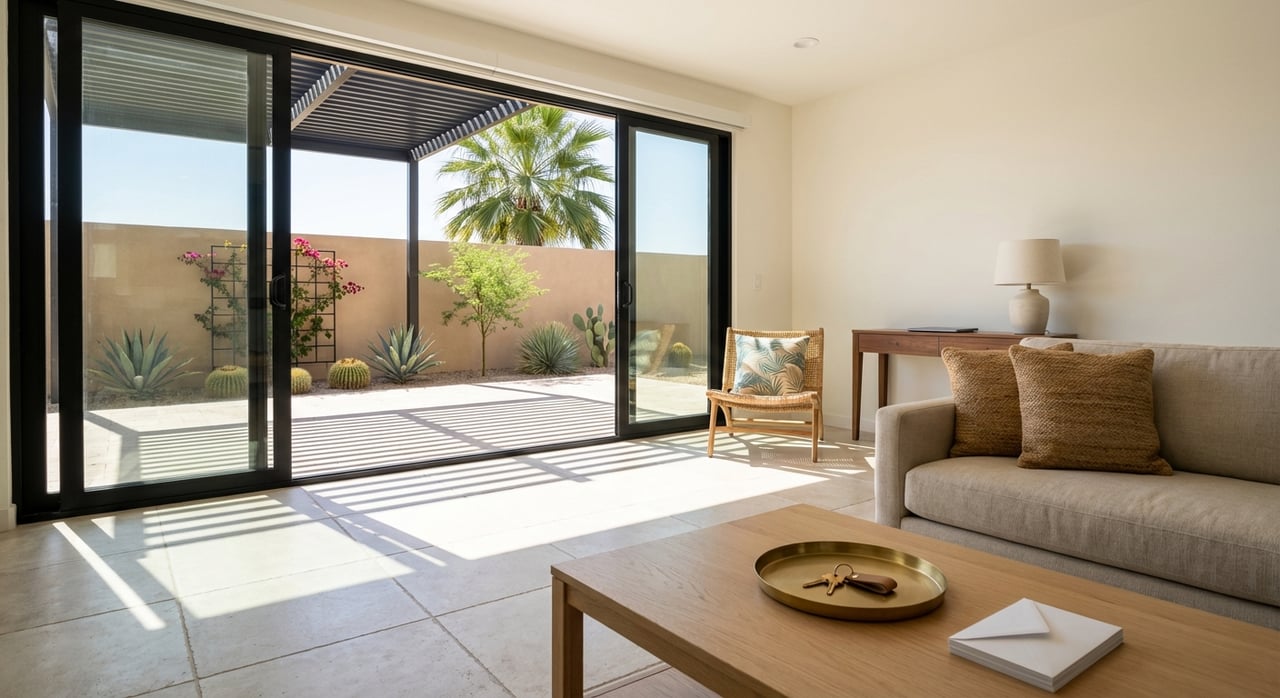
Thinking about a sunny desert‑lake escape that can also help pay for itself? Lake Havasu City attracts year‑round visitors, has a workable short‑term rental framework, and offers a wide range of price points compared with many coastal or mountain resort towns. If you are weighing a second home for lifestyle and potential rental income, you want clear facts on prices, carrying costs, rental rules, and real risks. This guide walks you through the essentials, with practical checklists and numbers you can actually use. Let’s dive in.
Snapshot: prices, product, and pace
Home values in Lake Havasu City typically sit in the mid‑$400,000s as of early 2026, with wide spreads by location and property type. Waterfront and island‑area homes often command substantial premiums, while inland condos and smaller homes trade at lower price points. That range lets you target either a pure lifestyle buy or an income‑minded property with strong amenities.
Market activity is seasonal. Visitor peaks in spring, early summer, and winter snowbird months can shape both listing activity and rental demand. If you plan to offset costs with rentals, seasonality is a feature to model, not a surprise.
What it costs to carry a second home
Property taxes
Effective property‑tax rates in Lake Havasu City are low compared with many U.S. metros. Public summaries often show effective rates around 0.2% to 0.4% of market value. For planning, confirm your parcel’s assessed value and rate, then multiply. Example: $500,000 × 0.36% is about $1,800 per year. Always verify with the assessor or tax bill for your specific property. See local context on effective property tax rates.
Insurance and reserves
Second homes and homes used as short‑term rentals can require specialized coverage and higher premiums. Ask for quotes that address seasonal vacancy, liability during guest stays, and flood coverage if applicable. A practical planning habit is to reserve 1% to 3% of the purchase price each year for maintenance, with a conservative 2%+ for homes with pools, older systems, or waterfront exposure.
Utilities, HOA, and rules
Budget for higher summer electricity usage, plus water, sewer, trash, internet, and any HOA dues. If you intend to host short‑term rentals, review HOA covenants for parking and rental policies. The city does not enforce private HOA rules, so you need to check documents directly. City guidance on permits and operations is summarized on the Lake Havasu City vacation rental requirements page.
Financing basics
Second‑home loans often call for larger down payments and more cash reserves than a primary residence, and investment property financing typically requires even more. Industry guidance commonly cites around 10% or more down for second homes and 15% to 25% or more for investment properties. For a quick overview of common lending conventions, see this primer on second‑home financing norms from a national lender (reference: AmeriSave’s guide in the research report).
STR rules: permits, taxes, and compliance
Lake Havasu City is STR‑permissive, but compliance matters. Owners must register, provide a 24‑hour local contact, notify neighbors, and renew a city permit each year. The annual vacation‑rental permit fee is $250 per property. You must also hold an Arizona Transaction Privilege Tax license for lodging activity. Review the city’s process on the vacation rental requirements page.
On lodging taxes, the city levies an additional 3% bed tax on transient stays, and hosts owe applicable state TPT lodging taxes. You can confirm the city bed tax in the FY2026 budget overview. See the city bed tax of 3 percent and the Arizona Department of Revenue short‑term lodging guidance for how to register and remit.
If your home sits inside an HOA, the association’s rules may limit or prohibit STRs. Confirm this early and in writing during due diligence.
Revenue potential and the real range
Market‑level data shows moderate occupancy and mid‑$200s nightly rates. According to AirDNA’s market snapshot, recent averages for Lake Havasu City are about 46% occupancy and a $273 average daily rate, with an average annual revenue near $21,900 across all listings. That average reflects many smaller units and part‑time listings. Waterfront homes and larger 3‑plus bedroom houses can outperform with the right amenities and calendar strategy.
Here is how those numbers translate, labeled clearly as illustrative:
- Market‑average framing: $21,900 gross annual revenue minus 25% for management, 10% to 15% for lodging taxes and platform fees, plus utilities, supplies, and a maintenance reserve. Net cash flow can be modest at market averages.
- Upside scenario: A well‑located 3‑bedroom near the water targeting an ADR of $400 at 50% occupancy could gross about $73,000. After 25% management and around 25% operating costs, a property like that might net 25% to 35% of gross before debt service. Results depend on address‑level demand, calendar availability, and guest experience.
Management approach changes the math. Full‑service local managers often charge 20% to 35% of rent, while limited‑service or platform‑assisted options can be 10% to 15%. Compare proposals carefully. See industry ranges for typical vacation rental management fees.
Who Lake Havasu fits best
If you live within a half‑day drive and want a flexible getaway you can use and share with guests, Lake Havasu can be a practical fit. Many second‑home owners prefer locations within about a four‑hour drive and use their homes for relatively limited personal nights each year. That pattern supports part‑time rental economics in drive‑to markets. For context, see the Pacaso Second‑Home Attitude Report.
The town’s lake‑and‑desert lifestyle also has a resilient visitor base. Events, boating, and the London Bridge area draw traffic year‑round, which helps support shoulder‑season bookings when priced and marketed well.
Opportunities and risks to weigh
Opportunities
- STR‑friendly framework with clear city permitting and state TPT compliance. That transparency helps you plan rather than guess.
- Price variety compared with many coastal or mountain resorts, so you can choose between value inland or premium waterfront.
- Strong drive‑market appeal from major metros, which supports weekend and event‑driven bookings.
Risks
- Seasonality and vacancy risk. Average occupancy below 50% means you should model conservative calendars and rates.
- Long‑term water and climate uncertainty. Lake Havasu is a managed Colorado River reservoir. Reservoir policy and drought trends can influence boating and waterfront premiums over time.
- Regulatory and HOA changes. City rules can evolve and HOAs may restrict STRs. Confirm the current rules before you buy.
- Insurance and flood exposure. Some parcels may require flood coverage or higher liability limits for rentals. Start with Mohave County floodplain resources and obtain quotes early.
- Travel logistics. Most out‑of‑state visitors arrive via Phoenix or Las Vegas and drive roughly three hours, so plan cleaner turnarounds and self‑check‑in for late arrivals.
Quick budgeting examples (illustrative only)
Use these as starting points, then replace assumptions with real quotes for the address you are considering.
Inland condo around $350,000
- Property tax at 0.30% example: about $1,050 per year.
- Maintenance reserve at 2%: $7,000 per year.
- STR permit if renting: $250 per year, plus lodging taxes on bookings.
- Add insurance, utilities, and HOA dues based on quotes and documents.
Standard single‑family around $500,000
- Property tax at 0.36% example: about $1,800 per year.
- Maintenance reserve at 2%: $10,000 per year.
- STR permit if renting: $250 per year, plus lodging taxes on bookings.
- Add insurance, utilities, pool service if applicable, and any HOA dues.
Premium waterfront around $850,000
- Property tax at 0.36% example: about $3,060 per year.
- Maintenance reserve at 2%: $17,000 per year.
- STR permit if renting: $250 per year, plus lodging taxes on bookings.
- Add higher insurance, utilities, dock care, and any HOA dues.
Tip: If you plan to rent for short stays, build in a vacancy factor, cleaning fees, platform fees, and local management. For tax planning on mixed personal and rental use, review IRS Publication 527 and consult a tax professional.
Your due‑diligence checklist
- Verify parcel‑specific taxes with the Mohave County Assessor and confirm the current effective rate on the property you want.
- Check FEMA flood maps and county floodplain status, then get insurance quotes that include STR liability and flood if needed.
- Pull address‑level STR comps by bedroom count and amenities, and model several ADR and occupancy scenarios using a data tool.
- Review HOA covenants for rental, parking, and use rules, and request a written confirmation during escrow.
- Confirm city STR permit requirements, TPT license steps, and the bed tax so you understand compliance and costs before you buy.
- Request proposals from at least two local managers, with fee schedules and example net RevPAR, so you can compare full‑service versus limited‑service options.
- For waterfront, include a scenario table that tests revenue and resale sensitivity to different lake‑level and visitation assumptions.
Ready to explore properties and run numbers side by side? Our team pairs neighborhood‑level comps with real operating assumptions so you can buy with confidence and purpose.
If you want a second home that supports your lifestyle and strengthens the local community, we are here for you. Connect with The Denovan Group to discuss your goals, review properties, and see how Sold On Giving can turn your purchase into measurable local impact.
FAQs
Is Lake Havasu a smart second‑home market for 2026 buyers?
- It can be for many buyers who value lake access, seasonal demand, and an STR‑permissive environment; prices cluster in the mid‑$400,000s with wide ranges by location, so you can target either value or premium waterfront.
How much can I earn from short‑term rentals in Lake Havasu?
- Market averages from AirDNA’s snapshot show about 46% occupancy, a $273 ADR, and roughly $21,900 average annual revenue across listings; specific addresses can perform higher or lower based on size, amenities, location, and calendar strategy.
What permits and taxes do I need to run an STR in Lake Havasu?
- You must register with the city, maintain a 24‑hour contact, notify neighbors, and renew a $250 annual vacation‑rental permit; you also need an Arizona TPT license and you must collect and remit lodging taxes, including the city’s 3% bed tax and applicable state TPT.
What are typical carrying costs for a $500,000 second home?
- A simple planning example is about $1,800 per year for property tax at a 0.36% effective rate and $10,000 per year for a 2% maintenance reserve, plus insurance, utilities, and any HOA dues; add mortgage costs based on your lender’s quote.
Do HOAs in Lake Havasu allow short‑term rentals?
- Some do and some do not; the city does not enforce HOA rules, so you must confirm covenants, rental terms, parking policies, and any minimum lease lengths directly with the HOA before you buy.
What are the main risks to consider as a buyer or investor?
- Plan for seasonality and vacancy, possible changes to STR or HOA rules, insurance and flood exposure, and long‑term reservoir and climate factors that can affect waterfront amenities and demand.