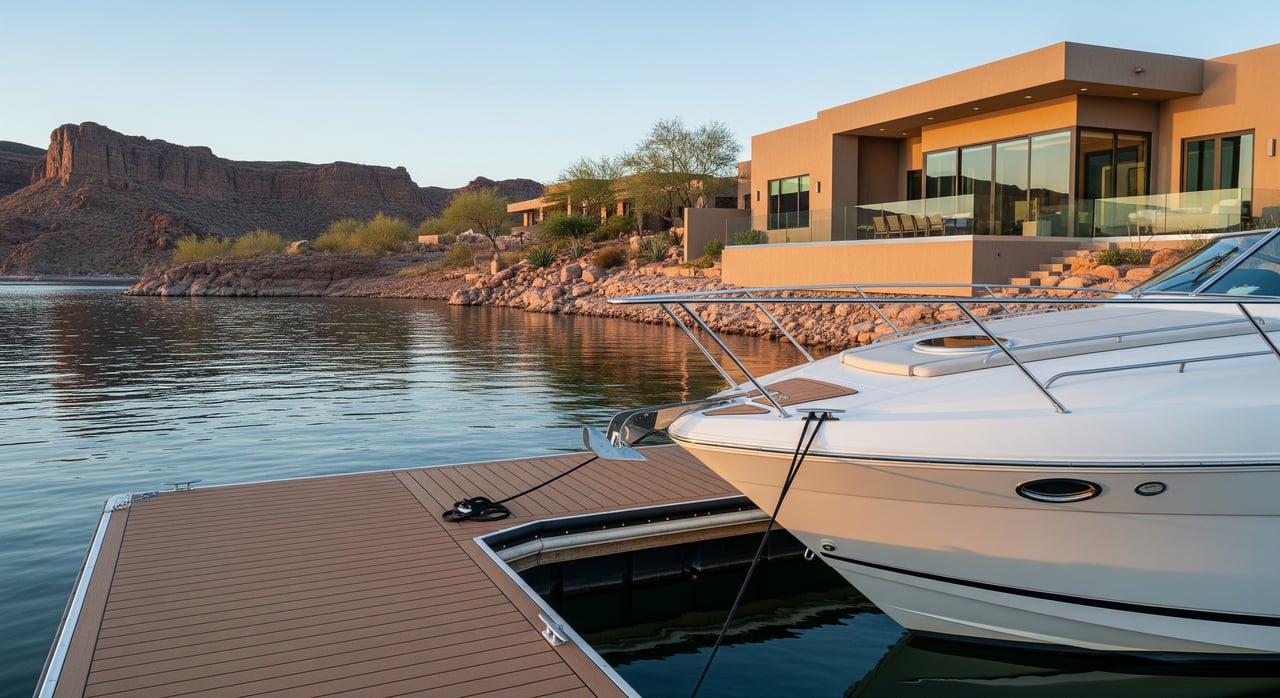
Do you picture stepping out your door and onto your boat, then cruising Lake Havasu by sunrise? If you are shopping or selling on The Island in Mohave County, you have probably seen the phrase “boat‑friendly” everywhere. It sounds simple, but it can describe very different types of access, rules, and costs. This guide breaks down what boat‑friendly living means on The Island so you can buy or sell with confidence. Let’s dive in.
Boat-friendly living on The Island
The Island District sits in the Lake Havasu and Colorado River corridor, where boating is a way of life. You will see powerboats, pontoons, personal watercraft, fishing boats, and even houseboats using nearby marinas and public ramps. For homeowners, boat‑friendly means practical access to navigable water plus the legal rights and infrastructure that make boating easy.
Climate shapes how you use the water. Summers are very hot, with daytime highs often above 100°F. Spring and fall draw steady recreational use, and winter brings strong seasonal demand from snowbird residents. Monsoon season in summer can bring thunderstorms and strong winds, so plan for mooring safety and storm checks.
Access levels you should know
Not all waterfront or near‑water homes offer the same experience. On The Island, access typically falls into four categories:
Waterfront with private dock
This is the most direct form of access. The parcel may include an existing dock or a recorded right to construct and maintain one. Always confirm permits, easements, and agency approvals before relying on private dock rights.
Waterfront with shared or community dock
Some properties tie into an HOA dock, a shared slip, or a community marina. You will use assigned slips and follow HOA or marina rules for guest moorage, hours, and maintenance.
Water view with no direct access
You enjoy views of the lake or channels but do not have legal mooring or dock rights. Boating is still convenient through public ramps or a leased slip, but it is not direct-from-your-yard access.
Near water with ramp or marina access
Homes close to the water without private dock rights can be very practical if you plan to launch by trailer. Nearby public ramps and private marinas serve most boat sizes, with seasonal demand patterns and potential waitlists.
Dock rights and documents that matter
Boat‑friendly living is part physical and part legal. The paperwork is what protects your access over time. Build your file with these items:
- Deed language and recorded easements that show littoral or riparian rights.
- HOA covenants, conditions, and restrictions that control docks, slip assignments, guest use, and boat or trailer parking.
- Permits and any encroachment agreements for structures in navigable waters. Local approvals can involve city or county planning, state agencies, and in some situations federal oversight.
- Marina or municipal slip contracts that outline fees, rules, and transfer policies. Some programs have waitlists or seasonal terms.
If you are unsure, ask the seller and title company for recorded documents, plat maps, and any permits tied to the dock or lift. Early verification saves time and prevents surprises during escrow.
Access infrastructure to inspect
Even with legal rights in place, the on‑site details determine day‑to‑day ease of use. Inspect the following:
- Dock and slip specs. Confirm size, usable width, and depth at low water. Make sure the draft suits your boat.
- Mooring setup. Note if it is a fixed dock, floating dock, boat lift, or mooring buoy. Different systems handle waves and wind differently.
- Utilities at the dock. Check for shore power and amperage requirements, lighting, and potable water.
- Ramp and walkway condition. Look at ramp grade, surfaces, and handrails for safe access.
- Parking and storage. Verify where you can park trailers and whether guest boats are allowed. Many HOAs and city rules regulate this.
Visit at different times of day and, if possible, at varying water levels. A quick on‑site test fit for your boat size is ideal.
Rules, permits, safety, and environment
Boat ownership here follows Arizona rules for registration and operator safety. Confirm current requirements for life jackets, age limits for personal watercraft, and operation under the influence laws. You should also review the list of required onboard safety equipment for your vessel type.
Docks and fixed structures in navigable waters generally require permits. Depending on the location and scope of work, approvals can involve Mohave County or the city, state‑level water and environmental agencies, and in some cases federal review. Starting early prevents delays and ensures your dock stays compliant.
Waterfront parcels may sit within FEMA flood zones. Flood zone status affects lender requirements and insurance coverage. Storms can also increase wind and wave action, pushing debris against docks and lines. Build a plan for monsoon‑season checks and routine maintenance.
Invasive species are a known issue in western waters. Programs targeting quagga and zebra mussels may include inspection and decontamination steps for watercraft. Learn where and when inspections occur and what documentation you need. Pollution rules also apply, including proper pump‑out for houseboats, fuel spill prevention, and waste disposal standards.
If a property uses a septic system near the shoreline, ask about maintenance history and local setback rules. Many marinas provide pump‑out stations, and some waterways prohibit sewage discharge.
Insurance and costs to expect
Most homeowners policies do not replace a dedicated marine policy. Separate boat insurance is typical, and you may need endorsements for docks and lifts. Liability exposure is higher around water because of guest activity and boat operation. Many owners choose umbrella coverage or meet minimums required by marinas.
Budget for ongoing costs:
- Dock upkeep. Routine inspections, decking replacement, hardware and piling maintenance, and electrical repairs.
- Seasonal care. Plan for heat, UV exposure, and storm season. Cleaning, protective coatings, and hardware checks extend life.
- Marina or HOA fees. Slip rental, utilities, pump‑out, security, and association dues vary by program.
Ask your insurance agent for quotes on home, dock, lift, and marine liability to understand the whole picture before you make an offer.
Market value and resale on The Island
Properties with direct water access or dock rights often command a premium, driven by lifestyle demand from recreational and second‑home buyers. Value is sensitive to the quality of access, the strength of documentation, and the simplicity of ongoing use. Clear records for permits, maintenance, and any slip agreements make your listing more attractive and speed up buyer decisions.
At the same time, higher maintenance and insurance costs can narrow the buyer pool. Pricing and positioning should highlight the specific access you offer, the condition of the dock, and any transferable rights. Having a recent dock inspection and copies of approvals on hand can create confidence from the first showing.
Buyer checklist for The Island
Use this quick list before you write an offer:
- Confirm legal dock or slip rights in writing through deed language, recorded easements, or marina contracts.
- Request permits and any encroachment agreements tied to the dock or lift.
- Review HOA rules for dock use, guest moorage, and boat or trailer parking.
- Check FEMA flood zone status and get a current map for the property.
- Ask for a recent dock or structural inspection report.
- Verify slip depth at low water and fit for your boat’s draft and beam.
- Confirm shore power voltage and amperage and potable water availability.
- Validate trailer parking options and local parking rules.
- Identify nearby marine services for fuel, pump‑out, repair, and storage.
- Get insurance quotes for home, dock, and marine liability.
- Ask about invasive species inspection and decontamination requirements.
Seller checklist for The Island
Prepare these items before you list:
- Title documents, recorded easements, and all dock or pier permits.
- A summary of marina contracts, slip leases, and any transfer terms.
- A current inspection of the dock, lift, and related structures.
- HOA documentation detailing dock rules, fees, and enforcement.
- Disclosures for environmental or septic issues and any prior flood claims.
Seasonal planning and lifestyle tips
- Heat strategy. Plan early morning or late afternoon outings in summer, and protect lines, rub rails, and decking from UV. Shade and ventilation help preserve surfaces.
- Storm readiness. Check mooring lines and hardware before monsoon season. Have spare lines, fenders, and a simple storm checklist.
- Peak use. Expect higher demand for slips and ramp lanes in spring, fall, and winter. If you need a leased slip, ask about waitlists early.
How we help on The Island
Boat‑friendly homes come with specialized questions about docks, documentation, and long‑term costs. Our team knows The Island’s waterfront nuances, from HOA rules to typical slip and permit issues, and we tailor pricing and marketing to highlight the access that buyers value. For out‑of‑area clients, we coordinate virtual tours, inspections, and paperwork so you can move decisively from anywhere.
If you are weighing options or want a clear path to market, reach out to The Denovan Group. We combine deep neighborhood expertise with modern marketing and a purpose‑driven approach that reinvests in local nonprofits through our Sold On Giving platform. When your move is ready, we are ready to help.
Ready to talk through your boat‑friendly goals on The Island? Connect with The Denovan Group for a local plan that fits your timeline.
FAQs
What does boat‑friendly living mean on The Island?
- It means practical access to navigable water plus documented rights and infrastructure, such as a private or shared dock, nearby ramps or marinas, and rules that allow easy, compliant boating.
Do Island waterfront homes automatically include dock rights?
- Not necessarily. Dock rights depend on deed language, recorded easements, permits, and agency approvals, so always verify with title records and permits.
How do I confirm dock permits and approvals in Mohave County?
- Ask the seller and title company for recorded permits and any encroachment agreements, then verify with local planning or building departments before closing.
Are invasive species inspections required around Lake Havasu?
- Many western waters have inspection and decontamination programs for quagga and zebra mussels. Check current Arizona rules and any local marina procedures before launching.
Do I need flood insurance for a home on The Island?
- If the property is in a FEMA Special Flood Hazard Area, lenders typically require flood insurance. Confirm flood zone status for the specific parcel.
Who pays for dock repairs and maintenance?
- Responsibility follows ownership and contracts. Private owners, HOAs, or marinas may be responsible depending on recorded documents and lease terms.